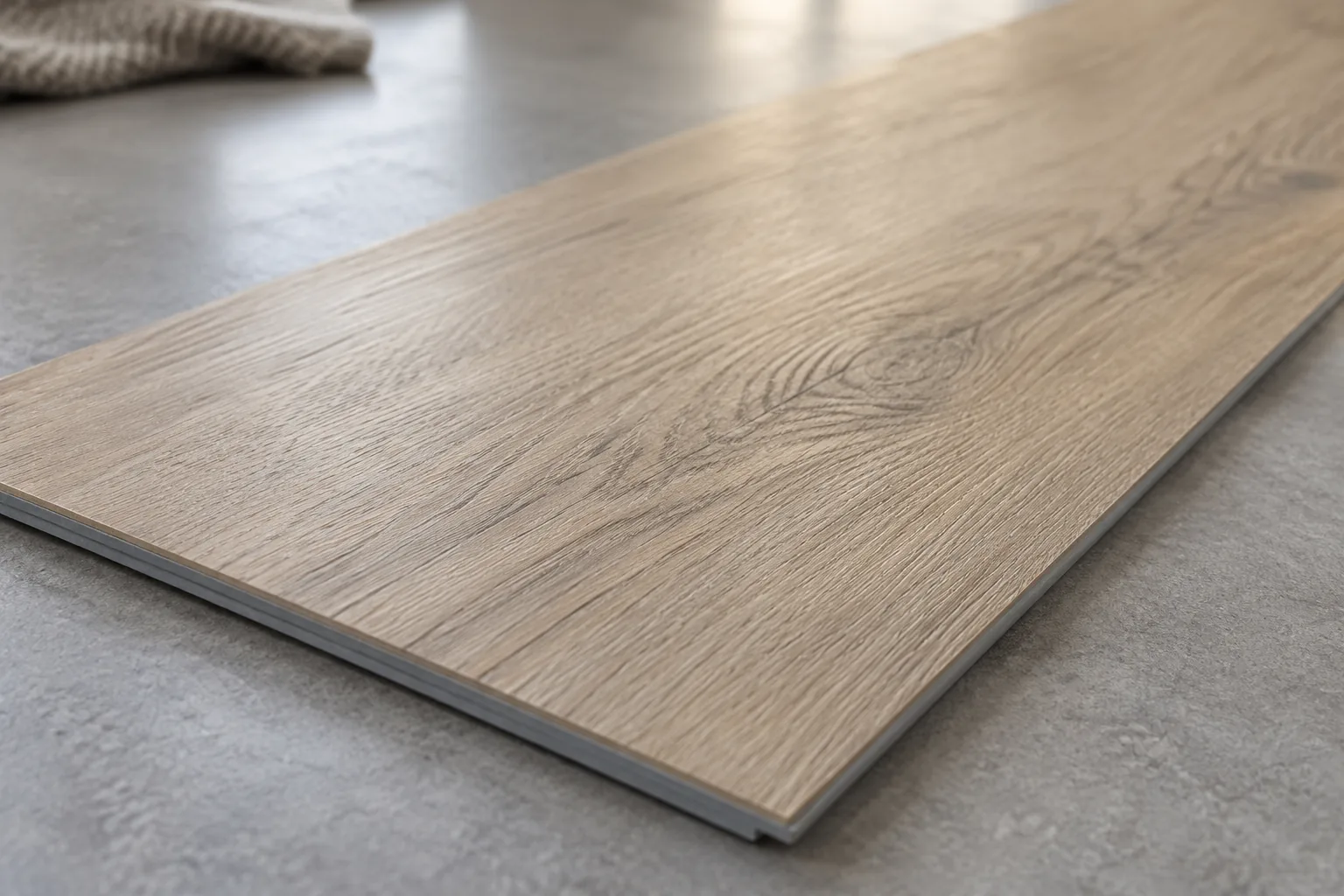
A 0.55 mm wear layer is a useful specification when you compare SPC flooring. It does not, by itself, tell you how easily the finished surface will scratch. If two quotations list the same wear-layer thickness, you still need to understand the surface treatment and the evidence behind each performance claim before choosing a product for your collection.
A visible scratch can appear while the decorative image underneath remains protected. Understanding that distinction helps you ask better questions, compare offers more accurately and describe your flooring honestly.
What your 0.55 mm wear layer tells you
In a conventional SPC plank with a printed decorative film, a transparent wear layer sits above the design. Its purpose is to protect that design as the floor is used. The rigid core underneath performs a different job, while the surface may receive a separate factory-applied finish.
The wear-layer figure describes thickness. It is not the total thickness of the plank, and it is not a standalone scratch-resistance score.
Manufacturer documentation illustrates the distinction. Gerflor's Creation 55 sample card identifies a 0.55 mm wear layer separately from its ProtecShield surface treatment, which the company associates with resistance to micro-scratches. This is an example from Gerflor's LVT range; its construction and performance claims should not be transferred to another product.
For your specification, record both the wear layer and the surface treatment. A single number leaves part of the surface construction unexplained.
Why a protected floor can still scratch
Wearing through a protective layer and scratching its surface are different forms of damage.
A sharp particle dragged across a floor under pressure can mark the surface without removing the full thickness of the wear layer. Amtico makes this distinction in its cleaning and maintenance guidance: it describes how grit can scratch vinyl flooring and separately defines wear-out as the loss of pattern and colour following removal of the protective wear layer.
That means a scratch does not automatically show that the wear layer is too thin. It also does not automatically establish a manufacturing defect. The product, the mark and the conditions that caused it need to be assessed.
| What you observe | What needs checking |
|---|---|
| A streak or scuff | Is it material deposited on the surface, or actual damage? |
| A fine scratch | Has the finish or wear layer been marked, and under what conditions? |
| Loss of the decorative image | Has the protective layer been worn through or deeply damaged? |
| A dent | Is there permanent deformation from a concentrated load? |
These observations help define the problem. They do not replace a product assessment or a relevant test.
The finish deserves its own line in your specification
Surface protection is an engineered part of the product. Tarkett, for example, describes its Tektanium treatment as improving scratch and stain resistance in the iD Classics LVT range.
The practical lesson is to ask what finish is applied to your proposed flooring and what supports its claimed performance. A coating name is a starting point for that discussion; comparable test evidence is more useful than a broad description such as “premium protection.”
Two products with a 0.55 mm wear layer should therefore not be assumed to have identical scratch resistance. Equally, you should not assume that every thinner wear layer outperforms a thicker one because it has a particular coating. Evaluate the complete surface construction for the intended use.
How to compare two flooring offers
Before approving your next SPC flooring specification, ask for the following information:
- The exact surface construction. Confirm the nominal wear-layer thickness, its tolerance and the factory-applied finish.
- Evidence for the claimed property. A wear result, a scratch result and an indentation result answer different questions. Request the test method, conditions and result relevant to the claim.
- A clear link to the proposed product. Check that the report identifies the construction being offered. Results from another range are not sufficient evidence for your collection.
- Representative samples. Compare the proposed finish and approved reference under consistent lighting. Treat this as a visual review, not a substitute for controlled performance testing.
- Warranty and maintenance information. Check how the documents distinguish wear, surface damage and permitted use before writing your own product descriptions.
When comparing test reports, look beyond the headline result. Differences in method, loading or assessment criteria can make two numbers unsuitable for direct comparison.
At the order stage, keep the agreed specification, reference sample and inspection requirements connected. Our article on product-specific PSI explains how we structure inspection records. Laboratory performance testing and shipment inspection answer different questions; one should not be presented as a replacement for the other.
Make the promise your flooring can support
If you develop a private-label collection, the wording on your sample board matters. “Scratch-resistant” should be supported by evidence for that product and accompanied by realistic care guidance. Avoid turning a wear-layer thickness into an unconditional promise about surface damage.
Care also affects appearance in use. Tarkett's vinyl maintenance guidance recommends protective furniture pads, entrance mats and appropriate cleaning, while warning against abrasive powders. Follow the instructions supplied for your specific flooring.
A 0.55 mm wear layer can belong in your specification. Give the finish, the test evidence and the intended application the same attention. Together, they provide a stronger basis for choosing your flooring and explaining its value to your customers.