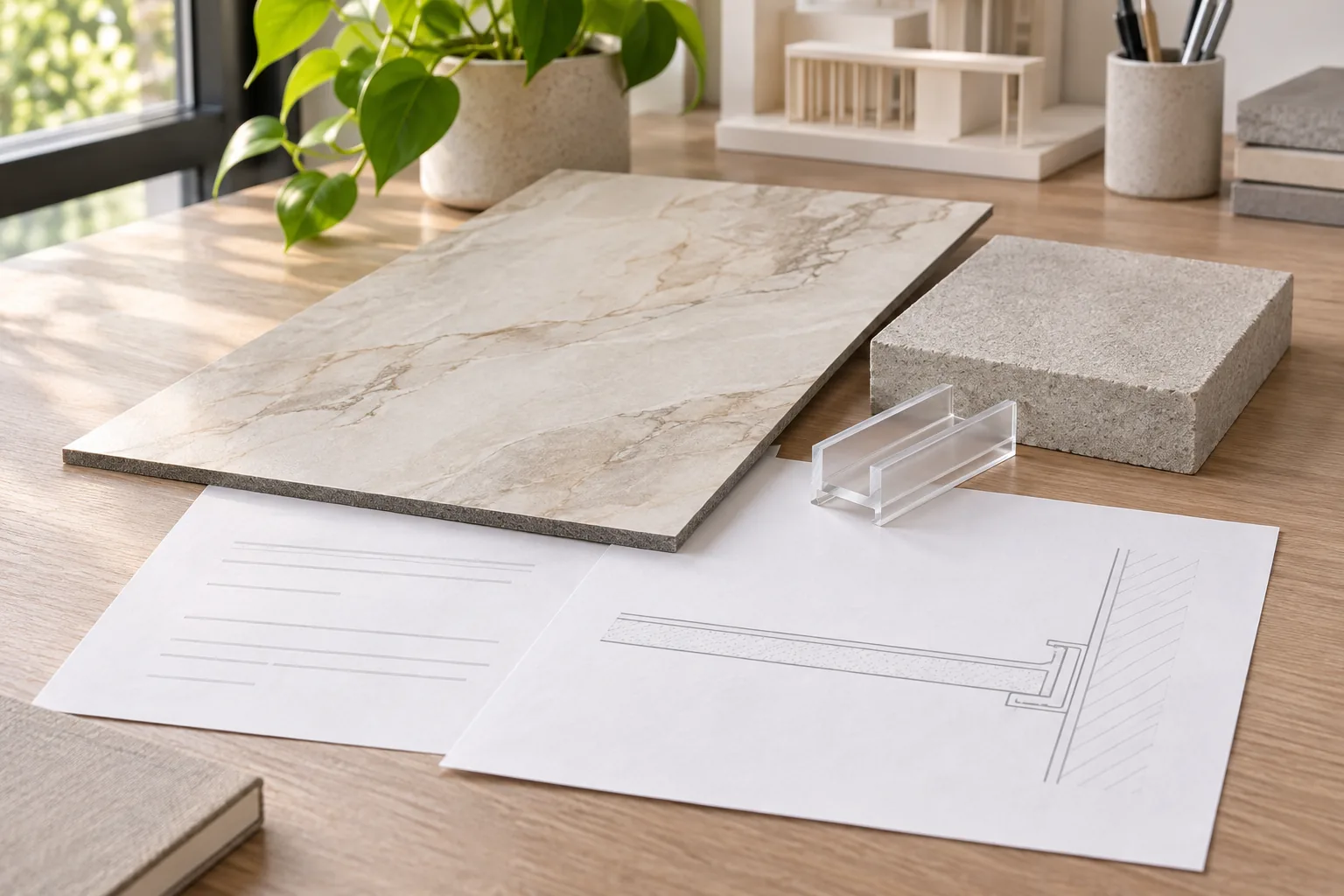
Your SPC wall panel quotation lists a fire rating. The report describes a panel bonded to a specified board, while your drawing puts the panel over battens with a cavity behind it. Before you approve the range, check whether the report’s field of application covers the way you plan to install it.
Start with the classification for your wall
Ask the project designer or specifier which reaction-to-fire class and evidence they require for the intended location. EN 13501-1 classifies reaction to fire from test data. The EU classification framework sets out wall-type products and floorings in separate tables, with floor classes carrying the “fl” suffix. If your product will go on the wall, look for classification evidence that covers that use. DIN overview of EN 13501-1, EU reaction-to-fire classes, published 21 April 2026.
Find the section that describes the installation
Open the EN 13501-1 classification report and look for “field of application” or “end use applications.” In a public Efectis report for a thermoplastic polyolefin wallcovering, the section names the calcium silicate substrate and sets out the named adhesive and application rate. That is the level of detail to look for in the report for your own product. Efectis classification report, January 2023, section 4.3.
ROCKO’s June 2024 manual lists C-s2,d0 for its own SPC wall tiles. When you see a class in a manual or quotation, ask for the applicable classification report so you can check the panel and mounting scope together. ROCKO wall tile manual, June 2024.
Match your quotation, report and drawing
- Panel. Match the product reference and the covered thickness, construction and surface options to the version in your quotation.
- Substrate. Match the wall board or other substrate named in the report, including any stated limits on its thickness, density or class.
- Mounting. Check the specified adhesive and application, or the mechanical fixings where covered. Compare any cavity and joint details with your drawing.
- Project requirement. Record the report number and the differences you find. Ask for documented coverage of any proposed change in substrate, fixing or wall build-up before accepting the classification.
If an installer proposes switching to a different adhesive or adding battens, check that change against the report before the purchase order or installation sign-off. Send your mounting detail and required class with the panel specification so the relevant documentation can be checked for the version you intend to order. Explore SPC wall panels, Discuss your project.