A floor contributes to the way a room sounds as well as the way it looks. Footsteps, moving chairs and everyday activity all become part of the experience. For flooring buyers, acoustic comfort can therefore be a useful point of difference when developing a new SPC collection.
On 21 September 2026, CFL announced a new US patent grant strengthening its acoustic SPC portfolio, which is licensed globally through i4F. The announcement puts renewed attention on a practical question: how can the construction of a rigid-core floor improve the experience of walking on it? Read CFL’s announcement.
What the new patent announcement means
The latest announcement concerns additional patent protection around an established area of development. CFL had already announced patents for acoustic multilayer flooring in January 2022, and i4F announced its licensing agreement for CFL’s acoustic, soft-feel SPC technology in January 2025. CFL’s earlier announcement.
That chronology matters when discussing the opportunity with customers. The September news is a development in the technology’s patent portfolio. It does not, by itself, establish a new level of acoustic performance for every product using it.
For distributors and brands, the commercial interest lies in the flooring that can be developed around the technology: its sound, underfoot feel, appearance, specification and suitability for the intended market.
How the construction addresses sound
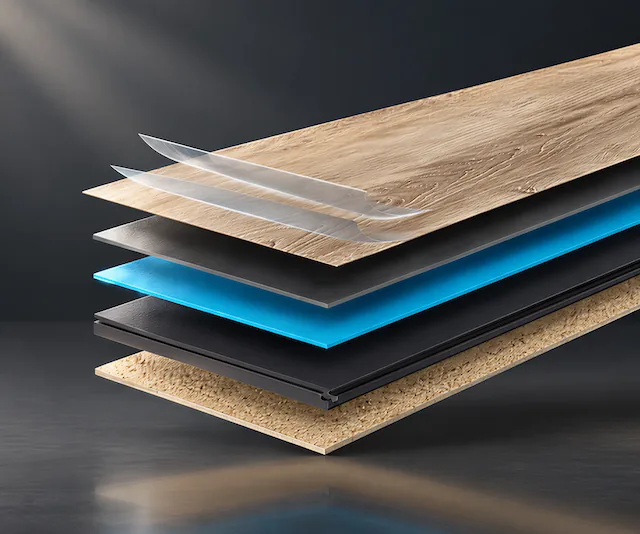
According to i4F, the technology combines multiple layers of engineered materials to target particular sound frequencies. Its stated aims include reducing walking noise in the room and footfall noise transmitted below, while providing a softer feeling underfoot. See i4F’s technology and licensing announcement.
This makes the complete construction relevant to the acoustic discussion. A buyer should review the finished product, including its surface, core, internal layers and backing, rather than judge its acoustic potential from the description of an attached pad alone.
The opportunity is to make sound and comfort part of the product brief from the beginning, alongside decor, texture, format and durability.
Quieter in the room and quieter downstairs
Two floors can sound different to the person walking on them while also behaving differently in the room below. These are separate aspects of acoustic performance.
Walking noise in the room concerns the sound radiated where the floor is being used. EN 16205 provides a laboratory method for measuring this. It is not a rating of how pleasant every listener will find the sound. BSI’s explanation of EN 16205.
Transmitted impact noise concerns impacts passing through the floor construction. Results depend on the tested assembly and method. ASTM E2179 distinguishes the contribution of the covering over concrete from the performance of the whole floor assembly, and explains that its ratings have no simple relationship to the corresponding ISO ratings. ASTM E2179.
A useful product presentation makes clear which benefit it is demonstrating. A listening sample can help explain the character of footsteps; a correctly identified test report supports the relevant measured result.
What buyers should compare
When assessing an acoustic SPC option, start with the experience or requirement the collection is intended to address. Is the priority a more comfortable sound within a home, reduced impact transmission, a softer feel, or a combination?
Then compare the proposed product with a relevant alternative. The comparison should identify the construction, total thickness, backing, test method and installation used. A headline acoustic figure becomes more useful when those details are visible.
Installation also belongs in the discussion. Any additional underlay should be explicitly approved for the selected flooring. For example, the published Firmfit Silent plank guide restricts additional underlayment, illustrating why permission must be checked against the actual product instructions. That restriction should not be assumed to describe every licensed construction. Firmfit Silent installation guide.
Finally, assess the complete offer: product cost, approved installation materials, preparation and the benefit the customer values.